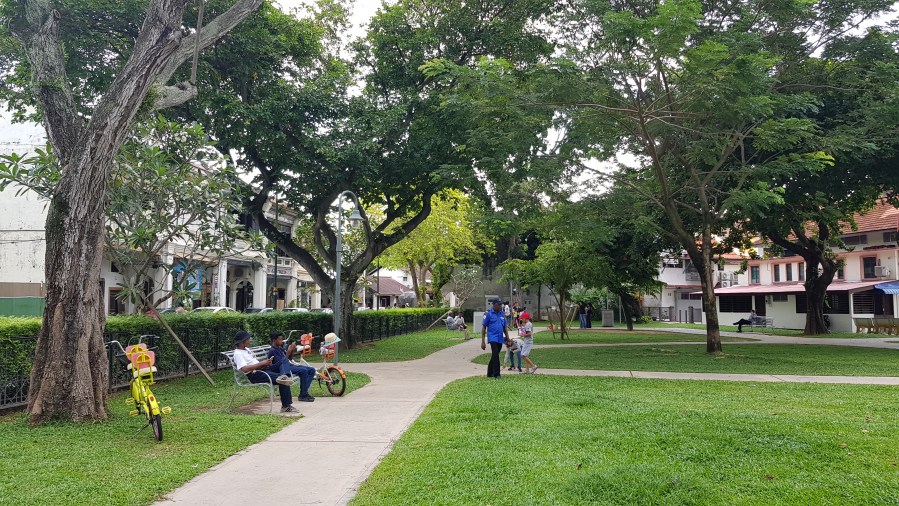
I finally had the opportunity to visit Armenian Park in George Town, Penang. This pocket park is located at the corner of Lebuh Armenian and Lebuh Acheh. It is very well-shaded and lush with the greens. The foot paths are great for strolling and the open lawn areas are perfect for children to run and play. I visited around 3.30 pm on a week day during a school holiday. So it was a pretty good sight to see families, children and tourists at the park.
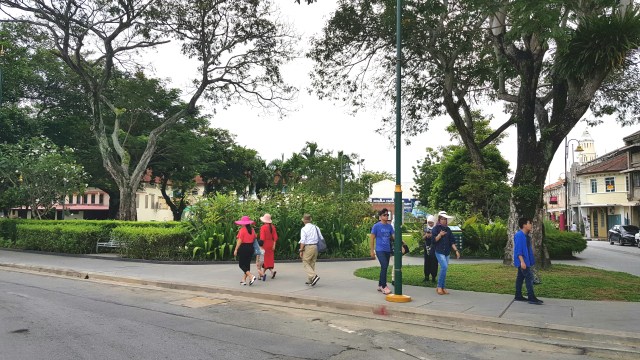
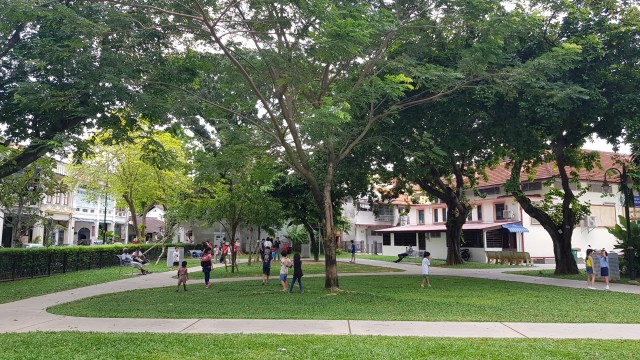
Armenian Park is surrounded by heritage buildings, mostly Eclectic Style Shoplots. You can read more about the Penang Shoplots by George Town World Heritage Incorporated here. From looking at the buildings as I walked around the park and comparing it with the images of their architectural types, some of these buildings might have dated back as early as the 1840s. If any of the buildings here was built as early as that, then that makes some of them 178 years old. They have been here much longer that us, what more those soils and the grounds which they stood on. It will be interesting to look at how they city was planned and structured, and how that have influenced how the city operated and how people lived. Or perhaps it is even the other way around – how peopled lived shaped the city. Many studies have been conducted on this topic, and ever-growing because there is always something new to learn. My colleague Dr. Nor Zalina from UKM is a passionate researcher on this topic. In her research team’s study, they identified that there are five key variables that make up a city or a town: building, plot, street, urban tissue and townscape (Mohamed, Harun & Abdullah, 2018). This is what they call ‘hierarchical level of physical elements’.

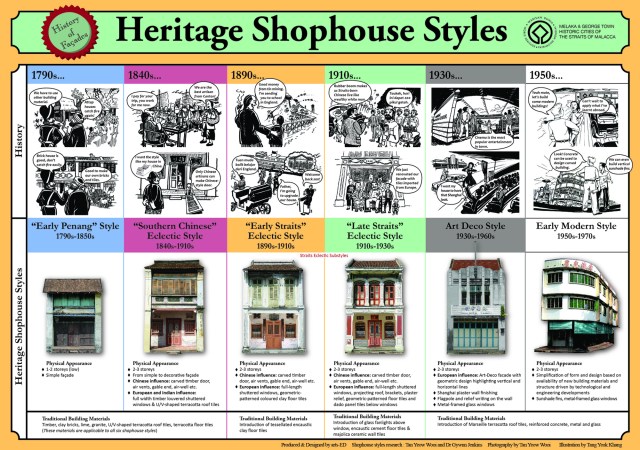
- Source: http://penangshophouse.com.my
Armenian Park was designed by Permata Green, a Penang-based Landscape Architecture Firm led by Teng Pe Yang who was one of the recipients of the Young Landscape Architect Award 2017. This project was also part of the Think City “Greening George Town” Programme. Armenian Park has grown to be an important place for the community and visitors to rest and play, especially during events. Nothing beats the coolness that the park offers during the day time when we are outdoors. That, and a cool cup of ice blended honey dew down the street! The backlanes nearby have also been upgraded and they look very nice and clean.
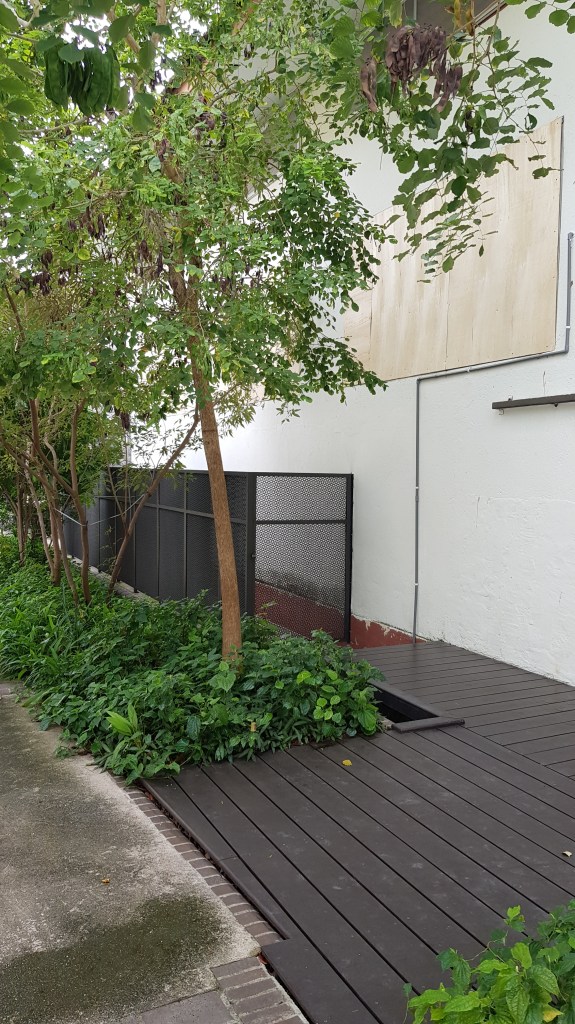
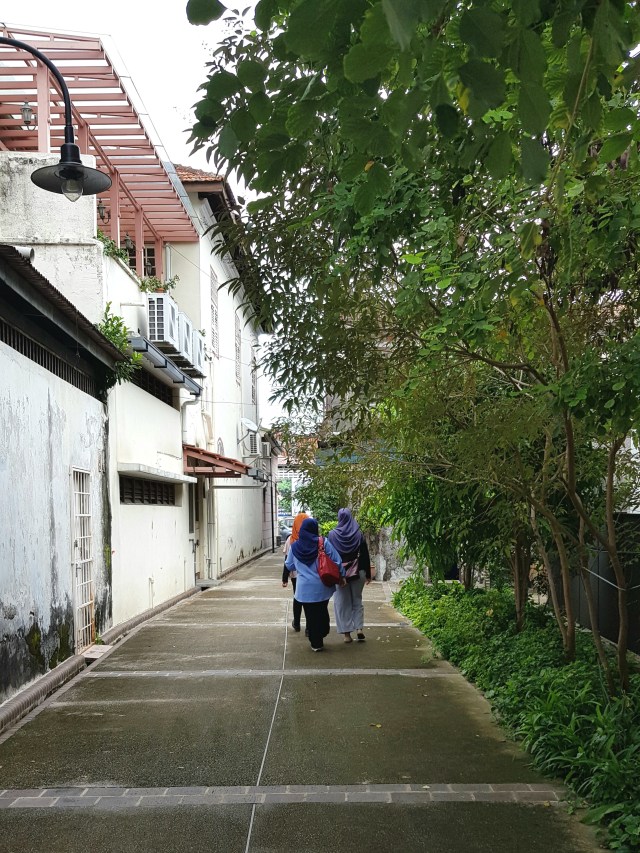
Any well-designed spaces, even as small as a pocket park at the street corner, can become a meaningful place. Designing and placemaking projects are good initiatives to reactivate spaces, and we’ve got to remember that placekeeping is also integral in ensuring that places like these are maintained and can be used by people for a long time. There’s an article on Defining place-keeping: The long term management of public spaces, which will be an interesting read on this topic.
As part of the current generation, we are considered fortunate to still be able to see how things were back then. Maybe our immediate great grandparents did not live in that era, but those in the line of our ancestral heritage sure must have did at some point. If not here, elsewhere, but during those times. I remember reading an article on The Dimensions of Place Meanings few years back, where the authors Saar & Palang (2009) wrote: “Meaning become especially strong when places as they were are not there anymore.” But how do we know what we have had if they are gone? Perhaps that is where oral history and tradition comes in. But while we still have it, we better take good care of it. And it seems that the Counting Crows band was right: “You don’t know what you got till it’s gone!”
If you’re in Penang and exploring George Town on foot, you’ll probably come across this park on your strolls. Have a seat and enjoy the greens!
 PLACE RESEARCHER